
A stiff neck after a rear-end collision, low back pain that returns after every workweek, or headaches that began when your posture changed can make ordinary movement feel uncertain. Chiropractic services Everett patients seek should do more than provide a brief break from discomfort. They should identify what is limiting movement, support the spine and nervous system, and give the patient a clear role in recovery.
For many people, pain is only the most noticeable part of the problem. An injury, repetitive work position, poor posture, or loss of normal spinal curve can change how muscles stabilize the body. The result may be restricted motion, recurring muscle tension, numbness, radiating pain, headaches, or fatigue with activities that once felt easy. A rehabilitation-focused plan looks at those patterns rather than treating one painful spot in isolation.
What Chiropractic Services Everett Patients Need After Injury
A car crash can create spinal trauma even when the vehicle damage appears minor. During whiplash, the head and neck move rapidly beyond their usual range. Muscles, ligaments, joints, and discs may all be affected. Symptoms do not always peak on the day of the collision, either. Neck stiffness, upper-back pain, headaches, dizziness, shoulder pain, low back pain, or tingling can emerge later as the body tries to compensate.
This is why a careful examination matters. A clinician should review the mechanism of injury, current symptoms, posture, spinal motion, neurological findings, and functional limits. When appropriate, imaging and coordination with other healthcare providers can help clarify whether a patient may have a disc injury, fracture risk, or another condition requiring a different level of care.
Whiplash injuries are not simply “tight muscles.” They can disrupt the normal curve of the neck and the coordinated work of the muscles that support it. Adjustments may help restore joint motion, but adjustment-only care may not be enough for a patient whose posture, muscle control, or spinal alignment has changed after trauma. Active rehabilitation is often the difference between temporary relief and meaningful progress.
The same principle applies to work-related strain and chronic pain. A warehouse employee who repeatedly lifts and twists, a desk worker who spends long hours looking down, and an active adult with recurring sciatica may have different triggers. Yet each may benefit from a plan that considers spinal mechanics, conditioning, movement habits, and the demands of daily life.
Relief Matters, but Rehabilitation Builds Capacity
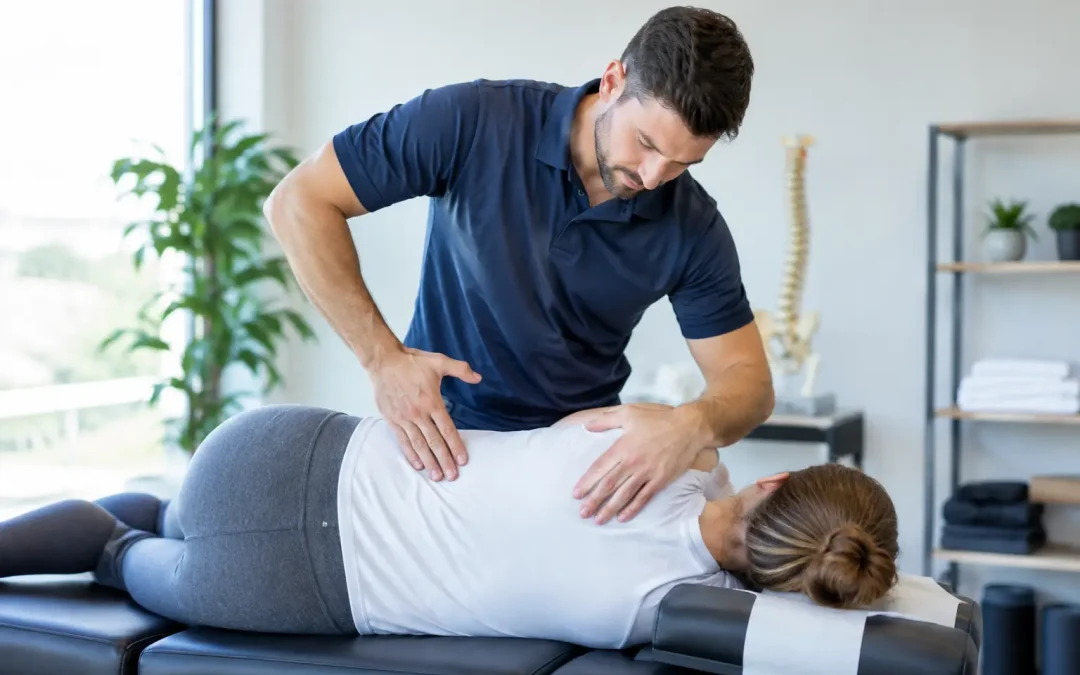
There is a place for hands-on chiropractic care when pain and restricted motion make it difficult to function. Chiropractic adjustments can be used to improve joint mobility and reduce mechanical irritation. Soft-tissue work, stretching, and targeted traction may also be considered based on the patient’s examination and tolerance.
But recovery should not end when a patient feels better for a few hours or days. If the supporting muscles have become weak, if the neck has lost its normal curve, or if poor movement patterns return the body to the same stressed position, symptoms can reappear. A stronger approach pairs symptom relief with a progressive effort to improve how the body holds, moves, and stabilizes the spine.
At NW Spinal Rehabilitation Clinic, that approach is built around active spinal and postural rehabilitation. Care may include chiropractic adjustments alongside cervical or lumbar traction, guided stretching, core work, neuromuscular exercises, and specific at-home participation. The goal is not to make patients dependent on appointments. It is to help them take part in restoring better function between visits.
What active participation can look like
Patients are often surprised to learn that rehabilitation begins before and continues after an adjustment. Depending on the condition and care plan, a visit may include preparing the spine and muscles with a Wobble Chair, performing repetitive cervical traction, stretching shortened tissues, and completing controlled exercises designed to reinforce improved positioning.
These activities are selected for a reason. For example, a patient with forward-head posture and neck pain may need more than mobility work. They may need help improving endurance in the muscles that support the neck, chest, and upper back. A patient with low back pain may need better trunk control and hip movement so the lower spine is not asked to do all the work during lifting or prolonged standing.
Progress is individual. Acute injuries may initially require a gentler approach, while a long-standing posture problem may call for steady conditioning over time. Pain level, age, work demands, imaging findings, and overall health all affect the pace of care. The right plan challenges the patient without pushing past what the body can safely tolerate.
Conditions That May Benefit From a Structured Plan
People often arrive seeking help for one symptom, then discover that several concerns are connected. Neck pain can travel into the shoulders. A disc bulge may create leg pain, numbness, or weakness. Headaches may be influenced by cervical tension and restricted movement. Poor posture may contribute to fatigue, upper-back discomfort, and reduced confidence with activity.
A rehabilitative chiropractic evaluation may be appropriate for car-crash and whiplash injuries, back and neck pain, disc bulges or herniations, sciatica, posture-related dysfunction, sports injuries, repetitive stress problems, and certain joint or mobility complaints. Some patients also need functional neurological assessment when balance, coordination, dizziness, or other nervous-system concerns are part of the picture.
Not every condition is suited to chiropractic treatment, and that distinction protects patients. Sudden or progressive weakness, loss of bowel or bladder control, severe unrelenting pain, fever, unexplained weight loss, or symptoms following major trauma need prompt medical evaluation. A responsible office screens for red flags and refers when another service is needed.
Choosing Chiropractic Services in Everett
When comparing chiropractic offices, ask what happens beyond the adjustment. A useful conversation should cover the cause of the complaint, what findings guide the treatment plan, how progress will be measured, and what the patient can do at home. Patients deserve to understand why a recommendation is being made, not just how often they are expected to come in.
It also helps to ask about experience with your specific concern. Someone recovering from a rear-end collision may need a provider with focused whiplash and trauma training. Someone with a disc diagnosis may need a careful plan that respects irritability, neurological symptoms, and activity limitations. For posture and chronic pain, a program that includes corrective exercises and traction may be more appropriate than care limited to occasional symptom management.
Convenience matters, but it should not be the only deciding factor. The right care relationship includes clear communication, attentive examinations, and a plan that evolves as your function changes. You should know what improvement looks like in practical terms: sleeping with less discomfort, turning your head more freely, returning to work tasks, walking farther, lifting with greater confidence, or resuming recreation.
Your role between appointments
The most durable improvements usually require consistency outside the office. That may mean completing prescribed traction, stretching, core exercises, or posture work at home. It can also mean adjusting workstation setup, changing lifting habits, taking movement breaks, or temporarily modifying activities that repeatedly aggravate the injury.
That participation is not a burden added to treatment. It is part of treatment. A few minutes of purposeful work done consistently can reinforce what is addressed during an appointment and give the body a better opportunity to adapt. Patients who understand this process are better equipped to make informed decisions about their care.
Pain can narrow your world gradually, until avoiding movement becomes normal. A thoughtful rehabilitation plan creates a path back toward the movements and responsibilities that matter to you, one supported step at a time.