
A neck injury after a car crash can make even ordinary tasks feel uncertain. Turning to check traffic, sitting through a workday, lifting a child, or sleeping comfortably may become difficult. In the conversation about active rehabilitation versus passive care, the central question is not whether relief matters. It does. The question is whether care also helps your spine, muscles, and nervous system regain the capacity to support daily life after pain begins.
Passive treatments can be valuable, especially when symptoms are acute and movement feels limited. But many back, neck, posture, and whiplash problems involve more than soreness. They can include restricted motion, weakened stabilizing muscles, altered spinal curves, guarded movement patterns, and reduced confidence in using the body normally. A plan that includes active rehabilitation is designed to address those functional changes, not simply make discomfort quieter for a few hours.
What Passive Care Can Do
Passive care refers to treatment performed for you rather than by you. Depending on the clinical situation, it may include chiropractic adjustments, manual therapy, massage, heat or cold therapy, electrical stimulation, or clinician-directed traction. During this phase of care, the patient is primarily receiving treatment.
There is a clear place for this approach. A careful chiropractic adjustment may help restore joint motion and reduce mechanical restriction. Traction may be used to gently support certain spinal conditions by reducing compression and improving mobility. Hands-on care can help a patient move more comfortably when pain, spasm, or inflammation has made motion difficult.
For a person in the early days after a collision, that relief can be meaningful. Whiplash injuries often involve stiffness, headaches, neck pain, shoulder tension, dizziness, and difficulty concentrating. When every movement seems to aggravate symptoms, asking someone to jump immediately into challenging exercise may not be appropriate.
The limitation is that passive care alone does not require the body to practice stability, coordination, posture, or controlled movement. An adjustment may improve motion, but it does not automatically retrain the muscles that must help maintain that improvement between visits. Relief without rehabilitation can leave the underlying movement problem largely unchanged.
Active Rehabilitation Versus Passive Care: The Key Difference
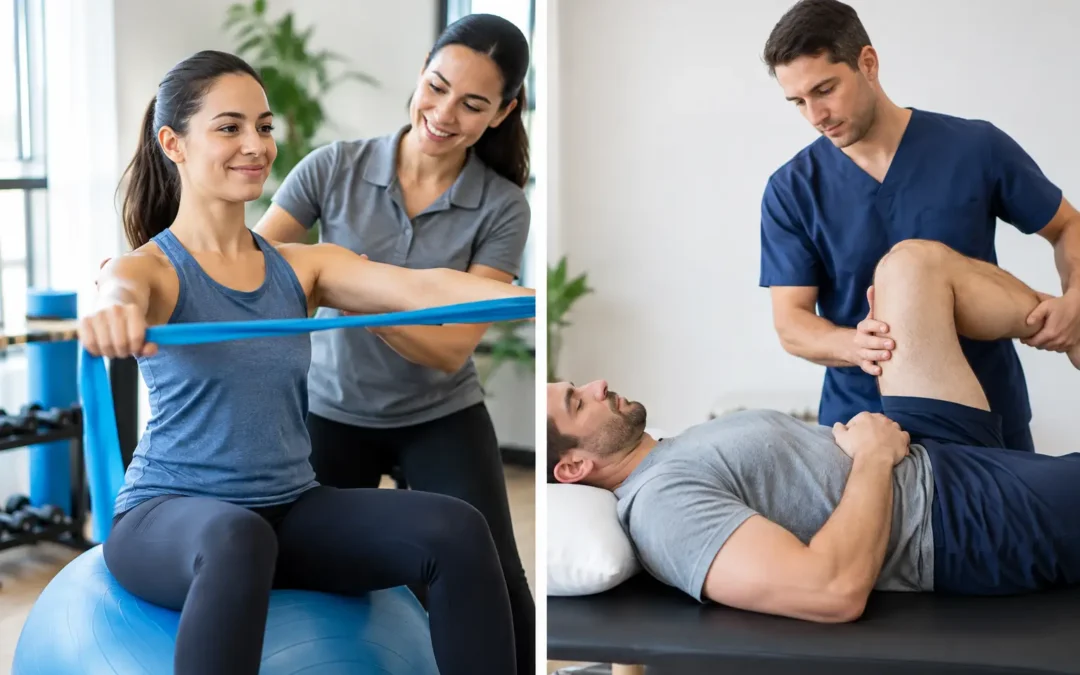
Active rehabilitation asks the patient to participate in recovery through carefully selected movement, positioning, stretching, strengthening, and home exercise. It is not a generic workout and it should not mean pushing through sharp pain. It is a structured process that progresses as your condition, tolerance, and function improve.
The goal is to help your body do more of the work needed for lasting recovery. That may include improving core control, restoring cervical mobility, building endurance in postural muscles, retraining balance, or helping you move without the protective guarding that often develops after injury.
This distinction matters because the spine is not supported by bones alone. Discs, ligaments, muscles, joints, and the nervous system all influence how you hold yourself and move. After an injury, the body may compensate by shifting weight, tightening muscles, avoiding a range of motion, or developing a forward-head posture. Those compensations can continue long after the initial pain has faded.
Active rehabilitation provides repeated, purposeful opportunities to correct those patterns. The work is gradual, but repetition is part of what makes it valuable. A healthier movement pattern has to be practiced before it becomes more natural in real life.
Why Adjustments and Rehabilitation Often Work Better Together
This is not an either-or decision in every case. For many patients, the most effective approach combines hands-on treatment with active care. Chiropractic adjustments can help address spinal joint restrictions and prepare the body to move more normally. Rehabilitative exercises, traction when clinically appropriate, stretching, and post-adjustment neuromuscular work can then help reinforce that improved position and motion.
Think of it this way: restoring movement is one step; teaching the body how to use that movement well is another. Both steps matter for someone recovering from a disc injury, chronic low back pain, a work-related repetitive strain, or a collision that changed how their neck and back function.
At NW Spinal Rehabilitation Clinic, this combined approach is central to care. Patients may begin with active preparation such as Wobble Chair work or targeted movement before an adjustment. Depending on the examination findings and treatment plan, care may also include repetitive cervical traction, stretching, core exercises, and specific at-home rehabilitation. The purpose is not to keep someone dependent on office visits. It is to help create a more stable foundation for function outside the clinic.
When Passive Care May Be the Right Starting Point
Active care should be individualized. A person with severe acute pain, a recent injury, marked inflammation, or substantial movement restriction may first need a gentler phase of care. The right first exercise is sometimes a small range-of-motion activity, breathing and postural work, or a simple position that reduces strain. Progression should follow the patient, not a calendar.
Certain symptoms also require prompt medical evaluation rather than self-directed exercise. New or worsening weakness, loss of bowel or bladder control, numbness in the groin area, severe unrelenting pain, fever with back pain, or symptoms following significant trauma should be assessed urgently. A thorough examination helps determine whether conservative rehabilitative care is appropriate and what level of activity is safe.
Even when passive care is the starting point, it does not have to be the final destination. As pain settles and motion improves, introducing carefully dosed activity can help reduce fear of movement and rebuild capacity. The pace will differ for a warehouse worker lifting all day, an office professional with posture-related neck pain, and an athlete returning to training.
What Active Rehabilitation Looks Like in Real Life
For many patients, active rehabilitation is less dramatic than they expect. It may start with learning how to sit with better spinal support, performing controlled neck movements, stretching shortened tissues, or activating deep core muscles without holding the breath. Small, precise movements can be more useful than aggressive exercise when the body has been injured or deconditioned.
As tolerance improves, the plan may progress toward postural endurance, spinal stabilization, balance work, and functional movements that reflect everyday demands. A patient recovering from a rear-end collision may need to regain comfortable cervical motion and head control. Someone with persistent low back pain may need better hip mobility, trunk endurance, and lifting mechanics. A person whose work involves prolonged computer use may need a plan that addresses forward-head posture and the breaks, positions, and exercises that support better habits.
Home participation is part of the process. Clinic visits provide assessment, guidance, adjustments, and progression, but the hours between visits are where new movement habits take hold. Consistency does not mean perfection. It means performing the recommended work often enough for the body to adapt.
The Trade-Off: More Participation, More Potential Carryover
Passive care can feel easier because the clinician is doing most of the work. Active rehabilitation requires time, attention, and a willingness to participate even when progress is gradual. That is a real trade-off, especially for patients balancing pain, work, family, and insurance claims after a car crash.
Yet active care offers something passive treatment alone cannot fully provide: practice. Muscles become more coordinated by being used. Endurance improves through progressive demand. Confidence returns when a person learns that a movement can be performed safely and comfortably again.
This does not mean every symptom can be eliminated or every spinal condition can be corrected the same way. Age, injury severity, disc health, previous surgeries, occupation, stress, sleep, and adherence to home recommendations all affect recovery. A responsible plan is specific to the person in front of the clinician, with measurable goals and adjustments along the way.
Choosing Care With a Long-Term Goal
If you are considering active rehabilitation versus passive care, ask what the treatment plan is designed to accomplish beyond temporary relief. Will it evaluate how you move? Does it include a progression for strength, posture, and mobility? Are you being taught what to do at home and why it matters? Is the plan adjusted as your function changes?
The best care plan often begins by meeting you where you are, then gives you a clear path forward. Relief can make recovery possible. Active rehabilitation can help you use that opportunity to rebuild the movement, stability, and confidence your daily life requires.