
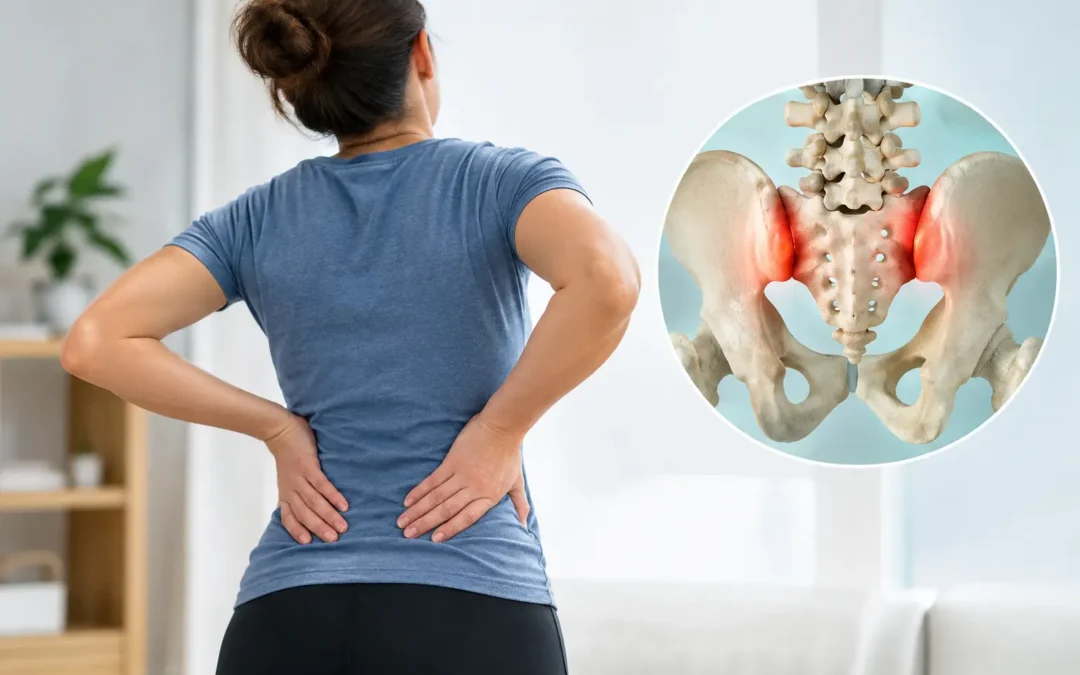
Pain that settles near one side of the low back, catches in the buttock, or makes standing from a chair unexpectedly difficult can be frustrating. Sacroiliac joint dysfunction is one possible source of that pattern, particularly when symptoms began after a car crash, a fall, repetitive lifting, pregnancy, or a period of altered posture and movement.
The sacroiliac, or SI, joints sit where the spine meets the pelvis. They are small joints with a demanding job: transferring force between the upper body and the legs while providing enough stability for walking, bending, and turning. When the joints and the surrounding muscles, ligaments, and movement patterns are not working well together, ordinary activities can become painful.
What Sacroiliac Joint Dysfunction Can Feel Like
SI joint symptoms are often felt just below the beltline, usually more on one side than the other. Pain may spread into the buttock, outer hip, groin, or upper thigh. Some people describe a sharp catch while rolling over in bed or getting out of a car. Others feel a persistent ache after sitting, standing, climbing stairs, or walking for longer periods.
The symptoms can look similar to disc-related pain, hip conditions, lumbar facet irritation, or nerve involvement. That is why a careful examination matters. The location of pain alone does not confirm the source. A clinician needs to consider your injury history, posture, movement, spinal alignment, joint motion, strength, neurologic findings, and which positions reproduce or relieve symptoms.
After a collision, SI pain can be overlooked because neck pain and headaches receive immediate attention. Yet the force of bracing, twisting, or absorbing impact through the seat can affect the low back and pelvis. Symptoms may not become obvious until the body begins compensating for restricted movement elsewhere.
Why the SI Joint Becomes Irritated
The SI joints are designed for limited motion, not large repeated movement. Problems may develop when there is too much motion, too little motion, or uneven force passing through the pelvis. A joint can become irritated after direct trauma, but it can also become stressed gradually when the spine, hips, and supporting muscles are not sharing the workload effectively.
Poor postural habits, prolonged sitting, weak or poorly coordinated core muscles, hip stiffness, and asymmetrical work demands can all contribute. For example, a worker who repeatedly twists while lifting may place more force through one side of the pelvis. An active adult returning to exercise too quickly after an injury may have enough strength to push through a workout but not enough control to maintain stable movement.
Pregnancy and postpartum changes can also affect pelvic stability because ligaments become more flexible and movement demands change. In other cases, a person may have degenerative changes in the low back or hip that alter how the pelvis moves. The right care plan depends on the driver of the problem, not simply on the pain label.
Sacroiliac Joint Dysfunction Requires More Than a Quick Fix
A painful SI joint may feel better temporarily when pressure is reduced or the surrounding muscles relax. That relief is valuable, but durable improvement usually requires more than treating the sore spot. If postural imbalance, restricted spinal motion, poor core control, or altered walking mechanics remain, the same forces can continue to irritate the area.
At NW Spinal Rehabilitation Clinic, care is built around this broader view of recovery. Chiropractic adjustments can help restore motion where joints are restricted, but adjustments are paired with active rehabilitation. The goal is to help the body hold and use improved alignment through movement, strength, flexibility, and neuromuscular retraining.
For one patient, that may mean beginning with gentle mobility work, stretching, and carefully selected traction to address related spinal restrictions. For another, it may mean rebuilding control through core and pelvic stabilization exercises after an accident. The pace should reflect the severity of symptoms, the patient’s examination findings, and the ability to perform exercises without increasing pain.
Stabilization Is About Control, Not Just Strength
When people hear “core strengthening,” they often picture intense abdominal workouts. That is not the starting point for a painful SI joint. Effective stabilization begins with learning how to coordinate the diaphragm, abdominal wall, back muscles, hips, and pelvic floor during simple movements.
Exercises may progress from controlled positions to sitting, standing, stepping, and functional lifting patterns. The purpose is not to brace rigidly all day. It is to give the pelvis appropriate support as the body moves. Better control can reduce the small, repeated stresses that make everyday tasks uncomfortable.
Mobility Has a Place Too
Stability and mobility must work together. If the hips, mid-back, or low back are restricted, the pelvis may compensate by moving in ways that increase SI stress. Restoring appropriate motion in nearby areas can reduce that compensation.
However, stretching aggressively into a painful area is not always helpful. Some patients need mobility work; others need less end-range stretching and more control. A rehabilitation plan should be based on examination findings instead of a one-size-fits-all online routine.
What a Thorough Evaluation Should Consider
A meaningful assessment for suspected SI joint pain examines more than the pelvis. Your provider should look at how you stand, walk, bend, sit, and transition between positions. They should also consider spinal curves, hip range of motion, leg strength, muscle coordination, reflexes, sensation, and whether a disc or nerve condition could be involved.
Provocation testing can help identify whether certain positions place stress on the SI joint. No single test is perfect, so providers often use a cluster of findings along with the patient’s history. Imaging may be appropriate in selected cases, especially after significant trauma or when there are concerns about fracture, inflammatory disease, or another structural condition. Imaging does not always show the source of mechanical SI pain, so it is one part of the clinical picture rather than the whole answer.
A clear diagnosis also protects patients from chasing the wrong treatment. Hip arthritis, lumbar disc irritation, radiculopathy, kidney conditions, and other causes of back or pelvic pain can require different care. An individualized examination helps guide that distinction.
What You Can Do Between Visits
Your daily choices can either calm or repeatedly aggravate the area. Early in recovery, avoid pushing through sharp pain during deep bending, twisting, heavy lifting, or high-impact activity. That does not mean complete inactivity. Too much rest can make muscles stiffer and less prepared for normal movement.
Instead, stay within a tolerable range of motion and follow the activity guidance you receive. Short walks may be appropriate for many people, while others may need a temporary reduction in stride length or walking volume. When sitting, avoid collapsing into one side of the pelvis or keeping a wallet, phone, or other bulky item in a back pocket. When lifting, keep the load close, turn with your feet rather than twisting through the low back, and stop if pain becomes sharp or travels farther down the leg.
At-home exercises matter because rehabilitation is not limited to the treatment room. Consistent practice reinforces the movement patterns developed during care. The correct routine should feel purposeful and manageable, not like a punishment or a test of pain tolerance.
When Low Back or Pelvic Pain Needs Urgent Attention
Most mechanical SI joint problems can be evaluated in a non-emergency setting, but certain symptoms should never be ignored. Seek urgent medical care for new loss of bowel or bladder control, numbness in the groin or saddle area, severe or worsening leg weakness, fever with significant back pain, unexplained weight loss, or pain following major trauma. Prompt evaluation is also important when pain is constant at night, is rapidly escalating, or is accompanied by symptoms that do not fit a typical mechanical pattern.
Pain near the pelvis can limit work, family life, sleep, and the activities that keep you healthy. A structured plan that addresses joint motion, posture, muscle control, and daily movement can give the body a better opportunity to recover. The next useful step is not guessing which exercise will fix the problem, but getting a careful evaluation and a plan you can actively carry into daily life.