
A neck that no longer turns comfortably, headaches after a car crash, or low back pain that returns every time you sit at work can make everyday life feel smaller. Pettibon System chiropractic is designed for people who need more than a quick adjustment and a few hours of relief. It combines hands-on chiropractic care with active rehabilitation intended to improve how the spine is aligned, supported, and used in daily movement.
For many patients, pain is only part of the picture. A collision, repetitive work demands, poor posture, or an old sports injury can alter normal spinal curves, reduce motion, and teach muscles to compensate in ways that eventually become painful. A corrective plan should account for those changes, not simply chase the symptom of the day.
What Makes the Pettibon System Different?
The Pettibon System is a rehabilitation-based chiropractic approach that looks at spinal mechanics, posture, muscle function, and the forces acting on the body. Rather than treating an adjustment as the entire intervention, the system uses adjustments as one part of a larger process.
The goal is to help restore more normal spinal positioning and then help the nervous system and muscles hold that improvement. This matters because the body often returns to familiar patterns after treatment. If the head has been carried forward for years, if the low back has flattened after injury, or if the pelvis has shifted into a compensatory position, the surrounding muscles may continue pulling the body back toward that pattern.
That is why active participation is central to care. Patients may prepare for an adjustment with specific movement work, then complete targeted rehabilitation afterward. The adjustment can improve joint motion, but traction, exercise, and neuromuscular retraining help reinforce the new position.
Pettibon System Chiropractic Care Begins With Assessment
A meaningful rehabilitation plan starts with understanding what has changed and what the body can safely tolerate. The clinical evaluation may include a health history, discussion of symptoms, orthopedic and neurological testing, range-of-motion measurements, posture analysis, and, when clinically appropriate, spinal imaging.
This process is especially valuable after a car accident. Whiplash can affect far more than the neck. The force of impact may strain ligaments, irritate joints, alter cervical motion, create headaches, aggravate a disc injury, or lead to numbness and weakness. Symptoms do not always appear immediately, and a person may initially assume the soreness will simply disappear.
The same careful assessment applies to non-accident concerns. A desk worker with recurring neck tension, an active adult with sciatica, or someone with a known disc bulge may have different needs even when they describe similar pain. Care should be based on examination findings, functional limitations, medical history, and response to treatment, not a one-size-fits-all protocol.
The Building Blocks of a Corrective Plan
A Pettibon-based program can include several forms of care, selected and progressed according to the patient’s condition. At NW Spinal Rehabilitation Clinic, the emphasis is on a structured plan that pairs chiropractic treatment with the work needed to improve stability and movement over time.
Chiropractic adjustments may be used to address restricted spinal or joint motion. For a patient with acute pain, the early focus may be on reducing irritation and restoring tolerable movement. As the condition improves, the plan can shift toward supporting posture, strengthening weak patterns, and rebuilding confidence with everyday activity.
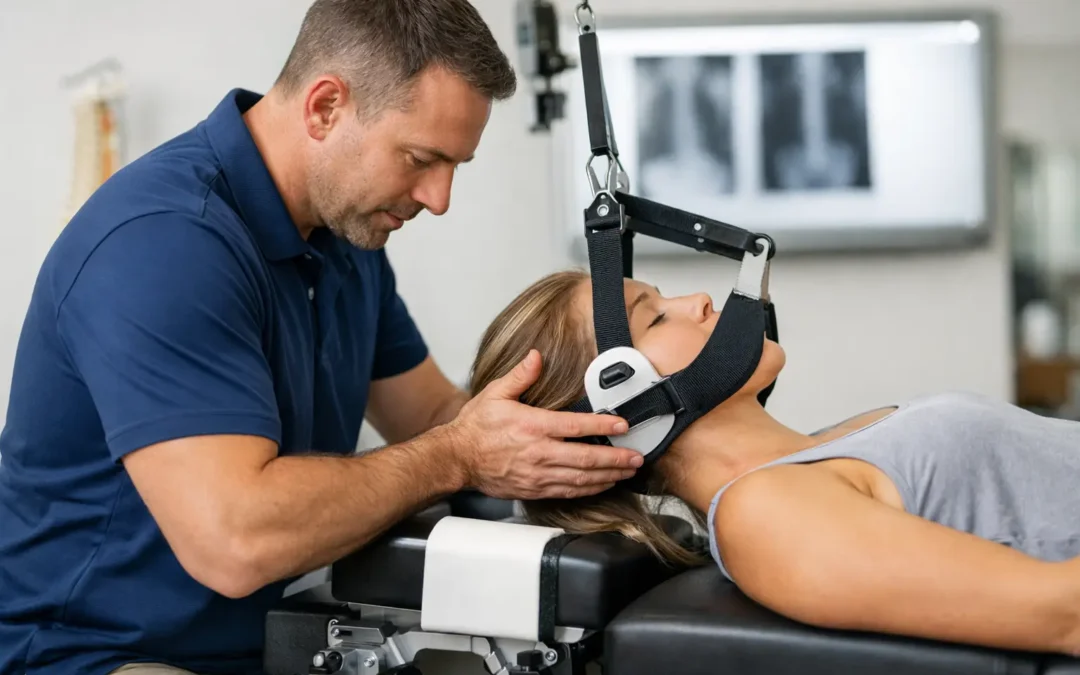
Traction is another key component for selected patients. Cervical traction, for example, applies a controlled pull to the neck and may be used within a broader program intended to address loss of normal cervical curve, stiffness, or post-injury dysfunction. It is not appropriate for every person, and it must be prescribed based on the individual’s examination and tolerance.
Active exercise turns care from something done to the patient into something the patient helps create. Depending on the plan, this may include Wobble Chair movement for spinal mobility, stretching for shortened tissues, core strengthening, postural exercises, and repetitive cervical traction. These movements are purposeful. They are chosen to help the body practice better control rather than merely create fatigue.
Home participation matters as well. Lasting change is difficult when treatment happens only during an office visit and old movement patterns take over the rest of the week. A clear home program gives patients specific work to perform between appointments and allows the doctor to measure progress, adjust dosage, and keep rehabilitation moving forward.
Why Adjustments Alone May Not Be Enough
An adjustment can be helpful for pain, stiffness, or restricted joint motion. But when a problem involves weak stabilizing muscles, altered posture, poor movement habits, or trauma-related dysfunction, an adjustment alone may not fully address the factors keeping the problem in place.
Consider the common forward-head posture. When the head sits in front of the shoulders for long periods, the neck and upper back muscles must work harder to hold it up. A person may receive temporary relief from an adjustment, then resume hours of screen work in the same position. Without mobility work, postural retraining, and strengthening, the mechanical stress can continue.
This does not mean every patient needs an extensive corrective program. Some conditions respond well to a shorter period of care, while others require a longer rehabilitation plan. The appropriate length depends on the nature of the injury, the severity and duration of symptoms, imaging findings when available, activity demands, and how consistently the patient completes prescribed care.
The aim is not to promise a perfectly straight spine or guarantee that every pain episode will never return. It is to improve function, reduce avoidable stress on injured tissues, and give patients a stronger foundation for work, family life, recreation, and recovery.
Who May Benefit From This Approach?
Pettibon System chiropractic may be considered for people whose symptoms appear connected to spinal injury, posture-related strain, movement restriction, or a need for active rehabilitation. This often includes patients with neck pain, back pain, headaches associated with neck dysfunction, sciatica, disc-related symptoms, restricted mobility, and persistent postural fatigue.
Car-crash patients are a particularly important group. Even a low-speed collision can place rapid forces on the cervical spine, and the symptoms can interfere with sleep, concentration, work, and driving. A rehabilitation-focused approach gives the clinician a way to address both the painful early stage and the later need to restore strength, coordination, and tolerance for normal activity.
Patients with progressive weakness, significant numbness, loss of bowel or bladder control, fever, unexplained weight loss, severe unrelenting pain, or symptoms after major trauma need prompt medical evaluation. Chiropractic and rehabilitation care should be coordinated appropriately with other medical providers when a condition requires imaging, medication management, specialist consultation, or urgent treatment.
What to Expect From an Active Recovery Process
Corrective care requires consistency. Early visits may involve more frequent treatment while pain, inflammation, and restricted motion are being addressed. As function improves, care often shifts toward rehabilitation, home exercise, and reassessment of measurable goals such as range of motion, posture, strength, symptom frequency, and activity tolerance.
Patients should expect to be involved. That may mean arriving ready to perform pre-adjustment movement work, following traction instructions, completing exercises at home, and communicating honestly about symptom changes. It also means asking questions. A patient should understand what each part of the plan is intended to address and how progress will be evaluated.
Recovery rarely follows a perfectly straight line. A demanding workweek, poor sleep, a long drive, or an unexpected flare can temporarily increase symptoms. Those changes do not automatically mean treatment has failed. They provide useful information about current capacity and may indicate that an exercise, workload, or treatment schedule needs to be adjusted.
A well-designed rehabilitation plan gives you more than an appointment on the calendar. It gives you a practical path to participate in your own recovery, build trust in your body again, and move toward the activities that pain or injury has placed on hold.