
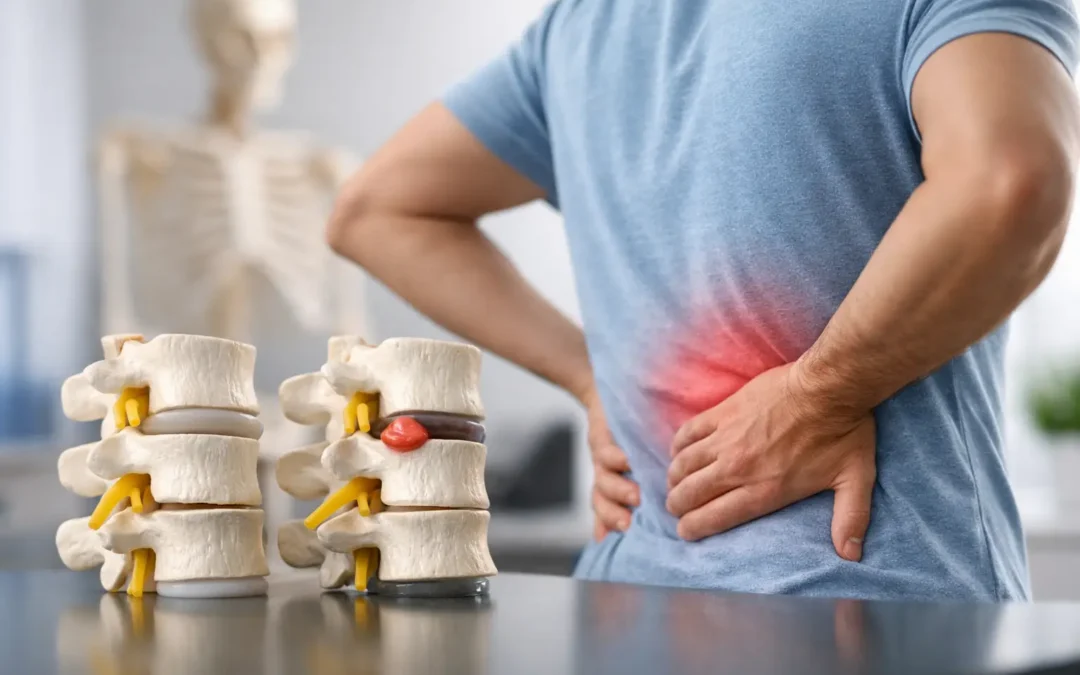
A scan may say “disc bulge” while a friend’s report says “herniated disc,” and the two terms can sound equally alarming. In a disc bulge versus herniation, the distinction matters, but it does not tell the whole story. The size and location of the disc change, whether a nearby nerve is irritated, your movement, posture, strength, and day-to-day symptoms all help determine the right course of care.
For many people in Kent, Everett, and across the Puget Sound area, disc symptoms start after a car crash, a lifting injury, repetitive work demands, or years of poor spinal mechanics. Some feel sharp pain immediately. Others notice stiffness first, then leg pain, numbness, headaches, or reduced mobility days or weeks later. A careful examination helps connect the imaging finding to what your body is actually doing.
What Is a Spinal Disc?
Discs sit between the bones of the spine and help distribute load while allowing controlled movement. Each disc has a firmer outer ring, called the annulus, and a softer inner material, called the nucleus. Healthy discs are not simply cushions. They are part of a larger system that includes spinal curves, joints, ligaments, muscles, and the nervous system.
A disc can change shape or become injured without causing severe pain. Conversely, a relatively small disc injury can cause significant symptoms if it affects a sensitive nerve root or occurs in a tight area of the spinal canal. This is why MRI findings should be considered alongside a physical examination, neurological testing, and the patient’s history.
Disc Bulge Versus Herniation: The Basic Difference
A disc bulge generally means the disc extends beyond its normal boundary over a broader area. Think of it as the disc perimeter spreading outward rather than one focused section pushing through. The outer annulus may still be intact, although it can be stressed, weakened, or degenerating.
A disc herniation is more localized. It occurs when inner disc material pushes into, or through, a weakened or torn part of the outer annulus. Reports may use terms such as protrusion, extrusion, or sequestration to describe how far the material has moved and whether a fragment has separated.
These descriptions are useful, but neither one automatically predicts how much pain a person will have. A broad bulge may cause no symptoms at all. A small herniation may create intense arm or leg pain if it presses on or inflames a nerve. The direction of the disc change is often as important as its size.
Where the Disc Injury Is Located Changes the Symptoms
In the neck, a disc bulge or herniation may contribute to neck pain, shoulder pain, headaches, tingling in the arm or hand, or weakness with gripping and lifting. After whiplash, the neck can also lose normal motion and muscular support, which may place ongoing stress on injured structures.
In the low back, symptoms may stay local or travel into the buttock, thigh, calf, or foot. This radiating pattern is often called sciatica when the sciatic nerve pathway is involved. Sitting, bending, coughing, lifting, or prolonged driving can make symptoms worse for some patients, while others struggle more with standing or walking.
Why a Scan Is Not the Entire Diagnosis
Imaging can be valuable, especially after trauma or when neurological symptoms are present. It can show disc contour changes, narrowing around nerves, arthritis, fractures, and other conditions that need attention. Yet an image is a snapshot. It does not measure how well you move, whether your muscles are compensating, or how your symptoms behave during daily activities.
A complete evaluation should consider spinal alignment, posture, range of motion, reflexes, sensation, muscle strength, and the specific positions that reproduce or relieve symptoms. It should also account for the mechanism of injury. A rear-end collision, for example, can place rapid forces through the neck and back even when vehicle damage appears minor.
This approach prevents two common mistakes: treating every disc finding as the source of pain, or dismissing a patient’s symptoms because an image does not look dramatic. Both the structural finding and the functional picture deserve attention.
When Disc Symptoms Need Urgent Medical Evaluation
Most disc-related pain can be assessed in a non-emergency clinical setting, but certain symptoms require prompt medical attention. Seek urgent evaluation for new loss of bowel or bladder control, numbness in the groin or inner thigh area, rapidly worsening weakness, trouble walking, or severe symptoms following significant trauma.
Persistent numbness, progressive loss of strength, unrelenting pain, fever, unexplained weight loss, or a history of cancer also warrant timely medical assessment. These signs do not automatically mean a serious condition is present, but they should not be managed by waiting it out or pushing through exercise.
A Rehabilitation-Based Approach to Disc Recovery
For many patients, nonsurgical care is an appropriate first step when there are no urgent neurological concerns. The goal is not simply to make pain disappear for a few days. It is to reduce irritation while restoring the movement, support, and spinal mechanics that help the body tolerate normal life again.
At NW Spinal Rehabilitation Clinic, care is built around active participation rather than adjustments alone. Depending on the examination and individual needs, a rehabilitation plan may include chiropractic adjustments, targeted traction, stretching, core and postural exercises, and neuromuscular work after an adjustment. Patients may also use equipment such as a Wobble Chair to improve controlled spinal movement and strengthen the muscles that support proper posture.
Traction can be useful for selected neck or low-back cases because it may help reduce compressive loading and improve tolerance for movement. It is not a one-size-fits-all solution, and it should be applied based on the patient’s diagnosis, symptoms, and response to care. The same is true of exercise. The right movement at the right stage can build confidence and function; the wrong intensity too soon can aggravate an irritated nerve.
Why Active Care Matters After Pain Improves
Pain relief is welcome, but it is not the same as recovery. When pain starts to settle, people often return quickly to long drives, desk work, lifting, sports, or physically demanding jobs. If spinal endurance, posture, and movement control have not improved, the same stress patterns can return.
Active rehabilitation helps bridge that gap. It gives patients a role in restoring strength and better mechanics between appointments. Home exercises are not busywork. They are part of the process of teaching the spine and supporting muscles to handle daily demands more effectively.
For someone recovering from a car crash, this may mean gradually rebuilding cervical motion and postural control after whiplash. For a warehouse worker or active parent with low-back and leg symptoms, it may mean learning how to move, lift, and condition the trunk without repeatedly provoking the injured area. Progress should be measured by more than pain scores: improved range of motion, better tolerance for work or driving, reduced numbness, and increased confidence in movement all matter.
Can a Disc Bulge or Herniation Heal?
Bodies can adapt and recover, but the timeline varies. Inflammation around a nerve may improve over weeks, while rebuilding strength, mobility, and tolerance for activity can take longer. Some herniations decrease in size over time, and many people improve without surgery. Others have recurring symptoms when underlying postural stress, deconditioning, or repetitive strain is not addressed.
Age, smoking status, sleep, nutrition, work demands, injury severity, and consistency with rehabilitation can all affect recovery. There is no honest promise that every disc finding will disappear on a future scan. A more meaningful goal is to improve function, reduce symptoms, and help you return to the activities that matter with a stronger, more resilient spine.
If you have been told you have a bulging or herniated disc, do not let the wording on a report decide your future. The next helpful step is a thorough evaluation that looks at your symptoms, your movement, and the recovery plan needed to help you move forward safely.