
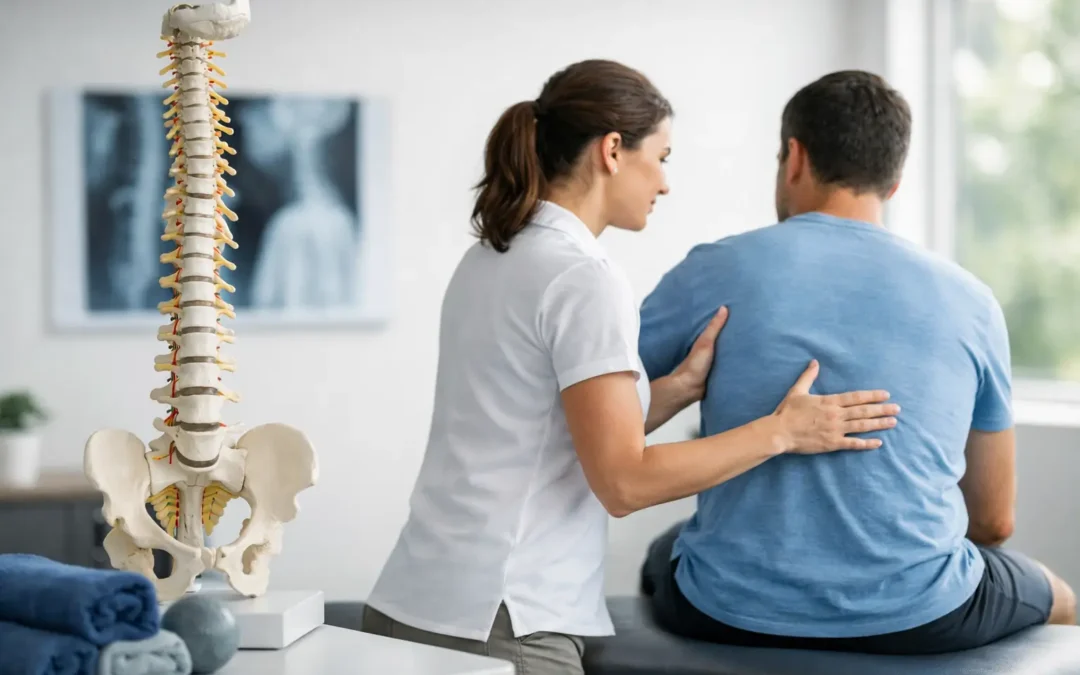
A neck that no longer has its natural curve can feel like it is carrying the weight of the day long after work is over. Some people notice persistent stiffness, headaches, reduced range of motion, or pain that travels into the shoulder and arm. Others learn about the change only after an X-ray following a car crash or a long period of neck pain. Loss of lordosis treatment should begin with a careful evaluation of the person, not just the image, because symptoms, injury history, muscle function, and daily posture all affect the right care plan.
The cervical spine normally has a gentle forward curve called lordosis. This curve helps distribute load, supports efficient movement, and works with the discs, joints, muscles, and nervous system. When the curve becomes reduced, flattened, or reversed, the neck may have less ability to manage stress. The goal of conservative rehabilitation is not simply to make a picture look different. It is to improve function, reduce mechanical stress where possible, and help the patient build the strength and movement habits needed to hold improvements over time.
What Loss of Cervical Lordosis Can Mean
Loss of cervical lordosis is sometimes described as a straight neck, military neck, or cervical kyphosis when the curve is reversed. It may be related to muscle guarding after trauma, whiplash injury, prolonged forward-head posture, repetitive work demands, degenerative changes, or a combination of factors. A flattened curve can also appear temporarily when someone is in acute pain and the muscles are protecting the area.
That is why an X-ray finding alone does not tell the whole story. Two people may have a similar spinal curve on imaging but very different symptoms and needs. One may be dealing with a recent collision injury and severe movement restriction. Another may have years of desk-related strain, recurring headaches, and weak postural endurance. A meaningful examination looks at alignment alongside pain patterns, orthopedic and neurologic findings, range of motion, muscle control, work demands, and prior injuries.
Disc bulges, herniations, numbness, tingling, or radiating pain require additional attention. These symptoms can indicate nerve irritation and may change how forcefully or how quickly rehabilitation should progress. Conservative care is often appropriate, but treatment must be individualized.
Loss of Lordosis Treatment Starts With a Clear Assessment
A restorative plan starts by identifying what is driving the problem and what the body can tolerate today. At NW Spinal Rehabilitation Clinic, care is built around active spinal rehabilitation rather than relying on an adjustment alone. The initial assessment may include postural analysis, spinal motion testing, functional evaluation, appropriate imaging review, and a detailed discussion of the accident, work activity, exercise history, and current limitations.
This process helps establish practical goals. For one patient, the first goal may be turning the head safely enough to drive without pain. For another, it may be reducing headache frequency, returning to physical work, or sitting at a computer without symptoms building by midafternoon. Progress should be measured by more than a pain score. Improved motion, stronger postural control, greater activity tolerance, and fewer flare-ups are meaningful signs that the body is recovering.
When Further Medical Evaluation Is Needed
Not every neck problem should be managed as a routine posture issue. New or worsening arm or leg weakness, loss of coordination, severe numbness, changes in bowel or bladder function, fever, unexplained weight loss, or significant pain after major trauma needs prompt medical evaluation. Patients with signs of fracture, spinal cord involvement, infection, inflammatory disease, or other serious conditions may need imaging, specialist care, or a different treatment pathway.
A responsible rehabilitation plan recognizes these boundaries. Non-surgical care can be valuable, but it is not a substitute for urgent medical assessment when red flags are present.
Building a Non-Surgical Rehabilitation Plan
For appropriate patients, loss of lordosis treatment often combines several forms of care. The sequence matters. A neck that is painful, guarded, and deconditioned may not respond well to an aggressive one-size-fits-all program. It often needs gradual preparation, precise corrective work, and repeated active participation.
Chiropractic adjustments may be used to address restricted spinal and joint motion when clinically appropriate. Adjustments are not intended to replace rehabilitation. They can be one part of a broader effort to help the spine move better so the patient can perform corrective exercises and daily activities with less restriction.
Targeted cervical traction may also be used to apply a controlled corrective force to the neck. Depending on the patient’s findings and tolerance, traction can be performed in the clinic and may be paired with specific positioning designed to support a healthier cervical curve. Traction is not right for everyone, and it should be prescribed and progressed based on examination findings, symptom response, and safety considerations.
Active rehabilitation is where lasting change is often supported. A program may include stretching shortened tissues, strengthening the core and postural muscles, improving balance and coordination, and practicing movement patterns that reduce repeated forward-head stress. Wobble Chair exercises, for example, may be used to encourage controlled spinal motion and prepare the body for corrective work. Post-adjustment neuromuscular exercises can help the nervous system learn to use improved alignment during movement.
For patients recovering from a car crash, the plan may begin more gently. Whiplash can affect the neck, upper back, shoulders, balance system, and deep stabilizing muscles even when initial symptoms seem mild. As pain settles and control improves, the program can progress toward endurance, strength, and return-to-work or return-to-activity goals.
Why Home Care Makes a Difference
A few appointments cannot outweigh the posture and movement demands of every other hour in the week. That is why at-home exercises, ergonomic changes, and consistent daily habits are essential parts of rehabilitation. The exact recommendations vary, but the purpose is consistent: help the patient reinforce clinic-based treatment between visits.
A person who spends hours looking down at a phone, leaning toward multiple screens, or driving with the head forward may need practical changes to workstation height, screen placement, breaks, and sitting posture. Someone in a physical job may need coaching on lifting mechanics, recovery positions, and how to recognize an early flare-up. These changes are not glamorous, but they can determine whether a patient maintains progress or repeatedly returns to the same irritation.
Consistency matters more than intensity. A short, well-performed home program completed regularly is generally more useful than an occasional hard workout that aggravates symptoms. Patients should report increased pain, dizziness, radiating symptoms, or headaches that occur with an exercise so the plan can be adjusted.
How Long Does Recovery Take?
There is no honest single timeline for restoring function after loss of lordosis. A recent muscle-guarding pattern may improve differently than a long-standing structural and postural problem. Recovery also depends on age, injury severity, disc health, work demands, sleep, stress, exercise participation, and how consistently the patient follows the recommended program.
Some patients feel better before their endurance and postural control have caught up. This is a common point where care can be stopped too early. Relief is valuable, but a neck that feels better for one week may still fatigue under a full workday or a long drive. Continuing with appropriate strengthening and corrective work can help turn early symptom relief into more dependable function.
At the same time, treatment should be responsive. If a patient is not progressing as expected, the clinician should reassess the diagnosis, loading level, exercise technique, contributing habits, and need for co-management or referral. A good plan does not force the same approach when the body is giving useful feedback.
What Patients Can Expect From Active Care
Effective rehabilitation asks something of the patient. Appointments may include preparation exercises, traction or other corrective procedures, chiropractic care when indicated, and guided neuromuscular work afterward. The patient then continues selected exercises at home. This active model is designed for people who want more than temporary relief and are prepared to participate in their recovery.
The best next step is a thorough evaluation that connects the spinal finding to the person’s actual symptoms, injury history, and goals. With the right diagnosis, progressive care, and steady participation, many people can move with more confidence and return to the work, family activities, and routines that neck pain has put on hold.